Lives Beyond Borders

A Summary of the Asian Missions of Two Florentine Dominicans: Angelo Cocchi and Vittorio Ricci
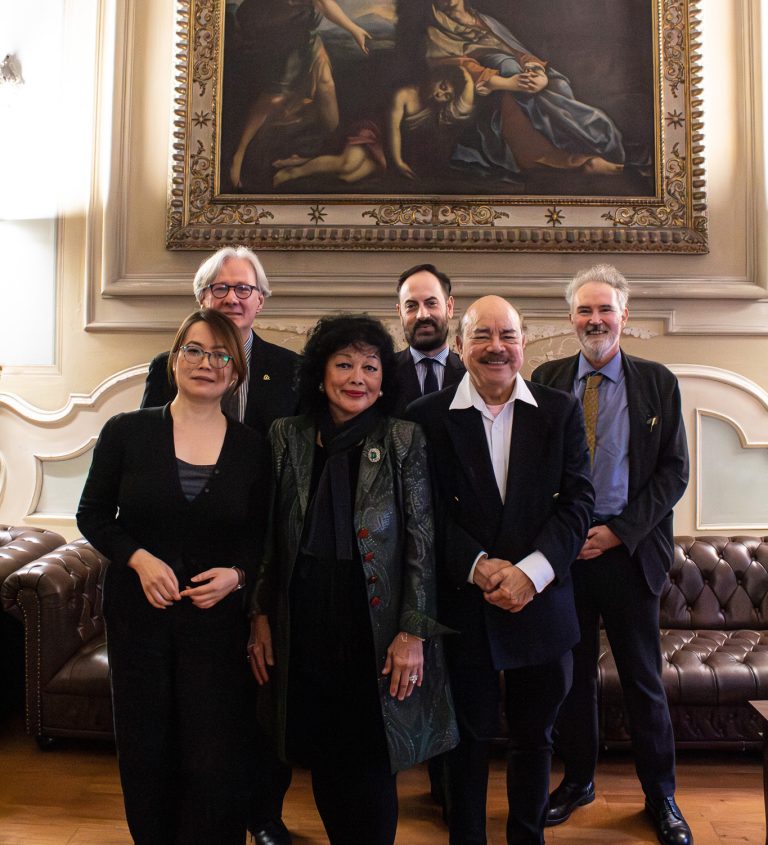
When we think of the Medici city’s global reach, trade and art tend to dominate the story. This article in Beyond Issue 9 shifts the lens to two Dominican friars born in Florence who spent their lives navigating the frontlines of seventeenth-century Asia: Angelo Cocchi (1597–1633) and Vittorio Ricci (1621–1685). Written by art historians Francesco Vossilla and Zhang Zheng-Ying, the piece grew out of the first Italy-Philippines conference ever hosted by a study abroad program, held at Palazzo Rucellai in October 2025.
A World Already Connected
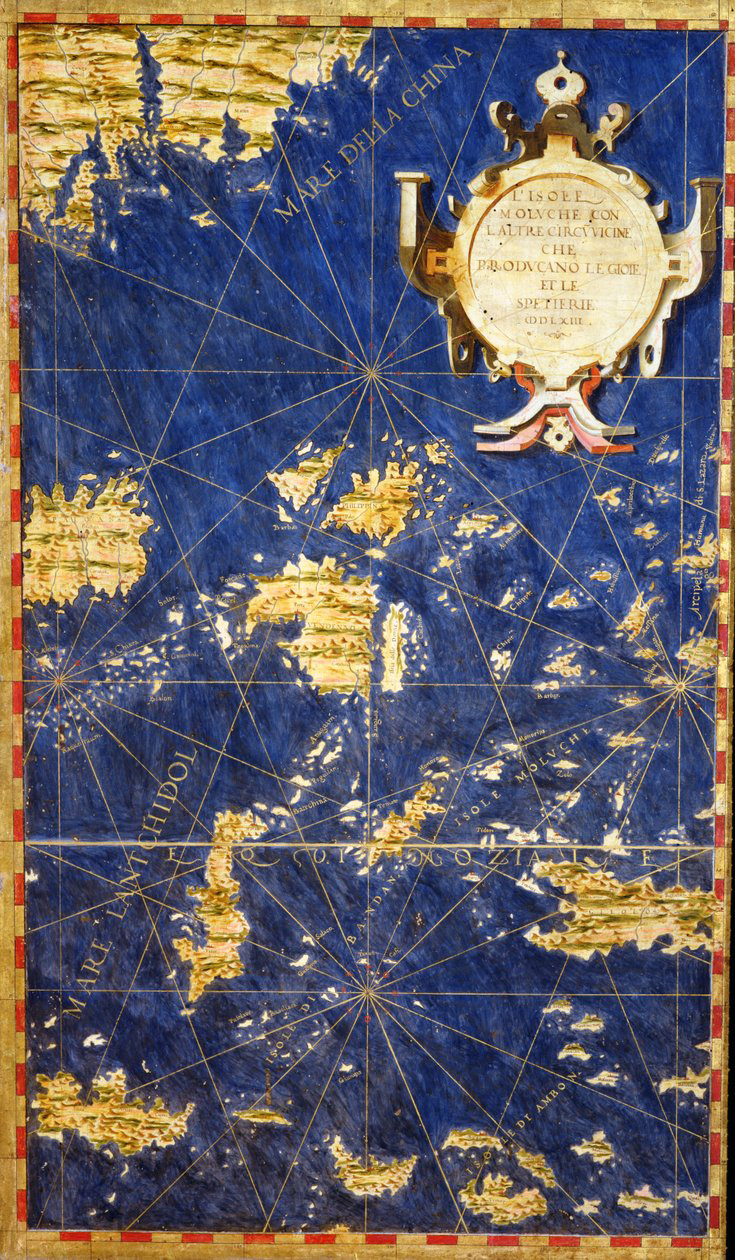
The article opens with a detailed reconstruction of the commercial and geopolitical landscape Cocchi and Ricci entered. Long before European missionaries arrived, Fujian merchants, Japanese traders, and Southeast Asian networks had already bound together China, the Philippines, Taiwan, and the Malay Archipelago. Portuguese and Spanish colonial expansion did not create these connections; it inserted itself, often violently, into systems already in motion. The Selden Map, a remarkable Ming-era cartographic artifact, captures this pre-existing world with precision.
Against this backdrop, papal bulls, rival religious orders, silver flows from the Americas, and the ambitions of warlords and shoguns all shaped the conditions in which Catholic missionaries operated. The Dominicans, barred from entering China through Macao (a Jesuit stronghold), sought alternative routes through Taiwan and the Fujian coast.
Angelo Cocchi: The First Dominican in Fujian
Cocchi’s journey reads like a series of near-disasters transformed into openings. Ordained in Acapulco in 1621, he reached Manila the following year and eventually transferred to northern Taiwan in 1628. A diplomatic mission to Fujian in 1631 ended in a pirate attack that killed most of his companions; Cocchi alone survived, drifting at sea before washing ashore on the Chinese coast.
Rather than retreating, he used the unexpected detainment to study the local dialect, forge connections with Christian scholars in Fu’an, and eventually disguise himself as a local to remain on the mainland. By 1632 he had established the first Catholic church in Fu’an. He died there in November 1633, just as reinforcements arrived. His central insight, that missionaries must adopt Chinese dress, language, and customs rather than announcing themselves as foreign envoys, anticipated the broader logic of cultural accommodation that would define successful Catholic missions in China.
Vittorio Ricci: Diplomat Between Empires
Ricci arrived in the Philippines in 1648 and spent the following decades as an improbable intermediary between the Spanish colonial authorities in Manila and the Ming loyalist warlord Zheng Chenggong (Koxinga), whose maritime empire stretched from Fujian to Taiwan and Japan. In 1662 Koxinga used Ricci to deliver an ultimatum demanding Spanish submission; Ricci then carried the rejection back through a storm-battered voyage to Taiwan, arriving to find Koxinga had just died. He remained active in the region until 1685, navigating rivalries between empires and between religious orders with a pragmatism rooted in genuine apostolic commitment.
Why This History Matters Now
Vossilla and Zhang frame their study explicitly as a resource for contemporary intercultural education. In an era of renewed geopolitical instability, the lives of Cocchi and Ricci offer something more than historical curiosity: a model of cultural mediation practiced under extreme pressure, across languages, religions, and competing imperial interests.