Florence and The Philippines

An Autumn Encounter in 2025
Most visitors to Florence come for the Renaissance. Few arrive thinking about the Philippines. Yet as Virgilio A. Reyes Jr., former Filipino Ambassador to Italy, argues in this personal and wide-ranging reflection, the two places share a history that is older, stranger, and more consequential than either side typically recognises.
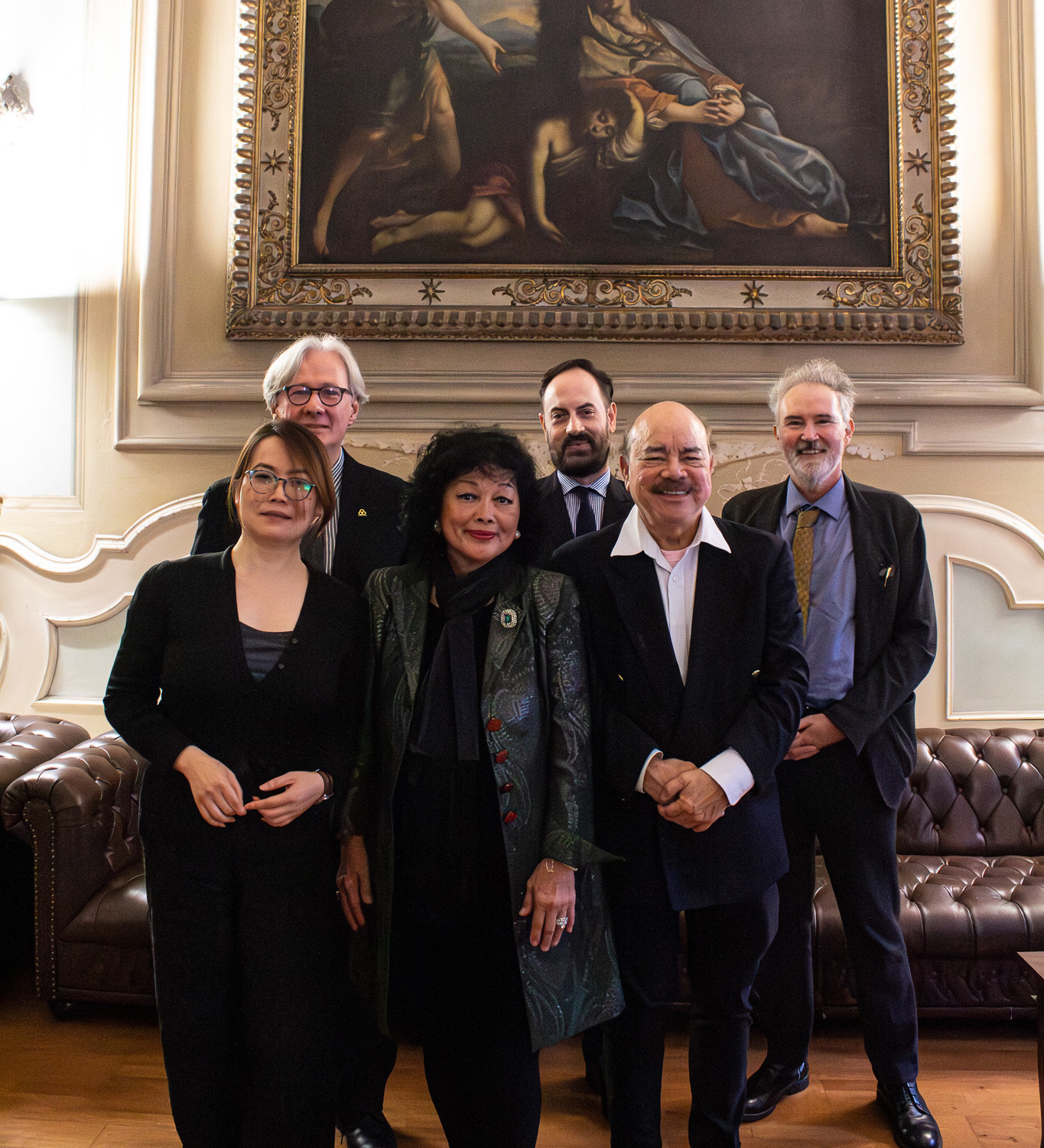
Reyes delivered the opening remarks at the ISI Florence conference held at Palazzo Rucellai on October 21, 2025, the first conference ever organised by a study abroad program on Italy-Philippines relations. This article is his revised and expanded speech.
Vittorio Ricci as a Lens on Early Modern Globalization
The conference centered on Vittorio Ricci (1621–1685), the Fiesole-born Dominican who served as missionary, scholar, and reluctant diplomat across the Philippines, Fujian, and Taiwan. Reyes uses Ricci as a thread connecting Florence to Southeast Asia through the interlocking currents of Catholic evangelisation, Chinese maritime commerce, and Spanish colonial governance.
Ricci’s career touched nearly every fault line of the seventeenth-century Pacific world: the rivalry between the Jesuits and the mendicant orders, the ambitions of Koxinga’s maritime empire, and the fragile Spanish hold on Manila. In 1662 Ricci carried Koxinga’s ultimatum to the Philippines demanding Spanish submission, then returned with the rejection. His position, operating simultaneously as representative of Spain and intermediary for China, led contemporaries and later historians to describe him as something close to a double agent.
The Conference and Its Contributions
Reyes summarises the papers presented at Palazzo Rucellai. Gabriele Capecchi traced Florentine connections to the Philippines through explorers and naturalists, including Georg Kamel, the Jesuit after whom the camellia flower is named. Carlo Cinelli examined Ricci’s overlapping roles as missionary and diplomat. Spyridon Kogkas explored how the Vatican’s missionary legacy connects to contemporary intercultural dialogue, noting that Filipino devotional festivals today are hybrid forms, neither purely European nor purely indigenous. Zhang Zheng Ying and Francesco Vossilla examined Ricci and Angelo Cocchi’s relations with Taiwan and Ming China, and Ricci’s diplomatic role involving Koxinga and the Dutch East India Company.
Florence Through Filipino Eyes
Reyes also writes as a visitor and observer. His account of Florence during that October week is warm and specific. The Beato Angelico exhibition at Palazzo Strozzi and Museo San Marco moved him in part because Fra Angelico, like Ricci, was a Dominican friar who began his career in Fiesole. The Florence Biennale, running concurrently at the Fortezza da Basso, featured five Filipino artists whose work drew on Christian iconography in ways Reyes found entirely at home in Florence’s visual culture.
He also writes about the local Filipino community: the Mindoreno Association, celebrating its tenth anniversary during his visit; the Antinori wine estate at Bargino, a meditation on how Florentine identity binds together history, landscape, and forward-looking ambition; and the discovery that Florentine cantucci bear a passing resemblance to the Filipino lengua de gato.
Why the Connection Still Matters
The Philippines today is the largest Christian-majority nation in Southeast Asia, geopolitically entangled in the renewed contest between China, Taiwan, and Western alliances. Reyes closes with the observation that the networks Ricci navigated in the seventeenth century, linking Florence, Manila, Fujian, and Taiwan, are not simply historical curiosities. They are early maps of a world still trying to find its footing.